NaMo NaMo

Namo Event

Showing posts with label Gujarat Development Reference. Show all posts

Sunday, 6 July 2014

“Are You Kidding Me?“ Surprises on my Return Visit to Gujarat After Six Years


A few weeks ago, I travelled to Gujarat to attend the project launch workshop for the second Gujarat State Highway Project (GSHP-II). It is a return visit to Gujarat after my last visit in 2008. I was the task team leader for the first Gujarat State Highway Project (GSHP) during 2005-2008, so I knew the state quite well and I expected to see a lot of changes during this new visit. But when I got there, I was still surprised.

Our team first went on a site visit first. We passed one road section which was improved in 2006 under the GSHP. The road will looked new.  My colleague Arnab Bandyopadhyay, who is the Project Leader for GSHP-II, asked the engineers from the Roads and Buildings Department (R&BD) whether they have rehabilitated the road recently. The answer was no. “You must be kidding,” I said to them. “How can an 8-year old road still look so new?”  But they were very firm. “No. We have not done any new works on those GSHP roads since they were constructed.”
On the second day, while we were standing outside the R&BD office in Gandhinagar (the center of the state administration), I saw a large 4-story building right in front of the R&BD office building. “Oh, yes, this and another one behind are new buildings,” the chief engineer of R&BD responded to my inquiry, “and actually they were completed within 8 months.” “Only 8 months?” I cannot believe what he said, “Are you kidding me? It cannot be done so fast in India.”  But he was very firm. He counted his fingers, saying “yes, from awarding the contract to move-in, 8 months in total.”

The next day morning, we had a project review meeting with each contractor. One common question we asked to every contractor was how long it took for them to get payments after they submitted invoices. “About four days” the first contractor answered. “Are you kidding me?” I said to them. “No, sir.” the contractor replied, after checking with his engineers and his accountant. One by one, all eight contractors said the same thing: 3 or 4 days. “This was really super!” I said to myself. Delay in contractor’s payments was a big problem in India before. Sometimes it took weeks or even months for the contractors to receive their payments.

Our last day in Gujarat was the project launch workshop. After a beautiful traditional lighting ceremony and speeches by R&BD minister, R&BD secretary, and other leaders, a training workshop was provided by World Bank experts on various topics related to the project.  Participants include R&BD engineers, contractors, consultants, and NGO representatives. It is a classic World Bank training workshop, but there was still something that surprised me. I remembered that in the past, at this kind of occasions when senior officials were present, R&BD engineers normally kept quiet, and they would not stand up and speak out without being called by those officials. This time, however, many R&BD engineers (including junior engineers) raised their hands to question or comment. There were thus very good interactions between Bank experts and audience.  From their questions and comments and from their confidence in speaking, I could feel the quality of R&BD engineers has improved enormously, particularly compared to 9 years ago when I first visited Gujarat.

By the end of the workshop, I started to realize that the R&BD has been significantly transformed from a traditional public works department, which executed government funded projects in a very slow and poor quality manner, to a new type of government agency that can effectively and efficiently plan, deliver and manage high quality road infrastructure and services. (See details in a World Bank publication, Institutional Development and Good Governance in the Highway Sector – Learning from Gujarat).

On my way back to Delhi, I was told by my colleagues that similar transformations have been taking place in some other Indian states in recent years.  “You may feel you are kidded again when you visit other states,” my colleagues joked to me.

Source: http://blogs.worldbank.org/endpovertyinsouthasia/are-you-kidding-me-surprises-my-return-visit-gujarat-after-six-years?cid=EXT_WBBlogSocialShare_D_EXT

Thursday, 6 March 2014

Rural change in Gujarat – Minimum Government, Maximum Governance in action

Originally published in The Pioneer. Meera Sanyal’s blogs on life in Gujarat’s Villages can be found below. Also don’t miss the tailpiece at the end.
- The Catalysts of Baroi
- Charity begins at home
- Villages of Mehsana
- Haribhai of Kiyadar and the Blue Revolution
- Hamlets of Meghraj
Gujarat’s economic success in recent years has been widely written about. Its performance on agriculture has also been widely reported. Beyond the mega projects and macro-statistics is a story of change at the grass-roots level that has not been as widely reported or appreciated. Given the polarities that any discussion on Gujarat draws, it is no surprise that a narrative on change deep inside rural Gujarat has not emerged from the mainstream media. In fact, much of the commentary on Gujarat in the mainstream media remains hostage to stereotypes and shallow analysis that seeks to reinforce previously held biases and prejudices over that State’s Chief Minister, Mr Narendra Modi.
To find more interesting and deeper analysis on Gujarat that comes free of bias or the mandatory politically correct references to the 2002 violence, one has to go beyond the shallow world of Indian news media. It thus was no surprise that one of the authentic from-the-ground reportage on transformation in rural Gujarat, comes not from a news organisation but from a public intellectual with no hard political affiliation. Meera Sanyal first made news back in 2009 during the Lok Sabha election, contesting as an Independent candidate. Since then she has been in the news, associated with a variety of public causes including most recently championing a slate of citizen candidates in the Mumbai local poll. RBS Foundation, a NGO associated with RBS India Bank headed by Ms Sanyal has been involved in a variety of rural initiatives. Over a series of four blog posts Ms. Sanyal recounts her first hand experiences from different parts of Gujarat on her personal website http://meerasanyal.wordpress.com.

The space in this column would not be enough to go over all the details shared by Ms Sanyal, but it would be in order to highlight four aspects of her findings. The first aspect is the spirit of enterprise that comes through all of her first-hand accounts. The second is the under-appreciated ethic of low to no dependence on Government in finding local solutions to local problems. The third is a grass-roots validation of near 100 per cent success claimed by some of the macro development initiatives. The fourth is, of course, on the ground that remains to be covered in the last mile of service delivery and rural governance.

From the villagers of Mehsana to the farmers of Sabarkantha, the spirit of enterprise is ubiquitous across Ms Sanyal’s accounts. Particularly striking is the account from a village in Sabarkantha called Navagraha and the story of Babu Bhai and Jaya Ben, where entrepreneurship through a self-help group became a second source of income to help finance an additional third source of income, even as their first source of income, which was agriculture, was looking to leverage market forces to be viable. It comes as no surprise, as Ms Sanyal herself observes, that farmers don’t need protection. Instead, they need to start thinking of themselves as entrepreneurs with access to a genuine level playing field.

The same spirit of enterprise comes through from the various villages of Mehsana with varying degrees of effectiveness, from dairy farming to animal husbandry to vermiculture.

Much of the discourse in our mainstream media is about Government, more dependence on Government. Since 2004, this dependence on Government has assumed an even greater proportion thanks to the Left liberal agenda pushed by the Sonia Gandhi-led National Advisory Council. By passing a series of laws that have created a long list of ‘rights-based entitlements’, the UPA Government has gone about deliberately fostering a culture of entitlement and a mindset of dependence on Government. It was, therefore, heartening to see that deep inside the villages of Gujarat there is still that ethic of seeking local solutions to local problems, with local communities taking responsibility to reduce the burden on Government and in the process limiting their own dependence on officialdom.

From Ms Sanyal’s detailed account of Hari Bhai of Kiyaadar and the Blue Revo- lution we see ‘minimum Government, maximum governance’ in action. Reading through Ms Sanyal’s narrative of the Blue Revolution, I was reminded of the Forest Rights Act, and the multiple parallel layers of governance it introduced by which individual and community claims would be on land use. The approach of local self- governance adopted for water management in the villages Meshana is the exact opposite of the top down governance model that the NAC Left liberals have been seeking to enforce through a variety of Legislations.

In Ms Sanyal’s words the governance model here is local, voluntary and mutually beneficial, and a great example of how grass-roots governance can grow to scale. The reduced burden of administration on the Government also earned the villages a rebate from the State Government on water cess to every village with a Pani Panchayat (or WAU), and to all villages that were members of a Canal Federation. The ethic of moving away from dependence on Government also comes through from examples in Sabarkantha, where villagers, who initially depended on the benefits from MGNREGA, finding a second source of income by creating a cooperative enterprise through a self-help group.

Every one of the villages Ms Sanyal validates had electricity. But as is to be expected, the last mile of service delivery and rural governance continues to be work in progress, with many areas still needing attention, from basic zoning and planning to toilets in every home.

As Gujarat goes to polls later this year, it will be interesting to see if the State will defy conventional wisdom to demonstrate that reduced dependence on Government, local self-governance and co-operative models of enterprise as an alternative to Government-sponsored job guarantee schemes, can be good politics as well.

Tailpiece (not in the original column and unrelated to Meera Sanyal’s blogs): 
Much is made on the lack of coherence and clarity of the Indian Right by the so called “secular right”. A secular policy regime that
fosters the Spirit of Enterprise
encourages a reduced dependence on Government
creates incentives for finding local solutions to local problems
is about Center Right as one can get.
Will our sanctimonious “secular right” pass the “smell test” on recognizing this ?

Source:  http://blog.offstumped.in/2012/04/09/rural-change-in-gujarat-minimum-government-maximum-governance-in-action/

Hari Bhai of Kiyadaar & the Blue Revolution


20120329-180950.jpg

India has approximately 142 million hectares of land under agricultural cultivation.
Of this 60% is rain-fed and consists mostly of small and marginal farms. Given the vagaries of the monsoons, the approximately 400 million Indians who live in these areas, suffer from high food insecurity and largely subsist below the poverty line.

The Irrigated areas, though much better off, suffer from low efficiency of water use, and generally high tail end deprivation (namely projects at the tail end of canals usually get little water).
In Gujarat, which lies in a semi arid zone, 70 % of the area is rain-fed. Rainfall is erratic and ranges from 350-1800 mm of precipitation. Many districts are perennially dry and much of Gujarat suffers from soil degradation, salinity, and high levels of ground water depletion.

Since 2007, the RBS India Foundation, has been working in the Mehsana and Sabarkantha districts of Gujarat, along with our partners DSC, to focus on Watershed development (in the rain-fed areas) and Participatory Irrigation Management (in areas that have access to irrigation), with the aim of improving agricultural productivity and access to drinking water. A total of 150 villages, comprising of 40,000 farmers’ families, in a command area of 38,0000 hectares, have been covered.

The purpose of my visit to Gujarat from March 9 – 24, 2012 was to undertake a first hand Impact Assessment of our projects; to experience life from the perspective of women in some of our project villages; and to document and share the stories of the everyday heroes and heroines that I met.
This is the story of Hari Bhai the hero of Kiyadaar, who by applying the principles of the cooperative movement to the management of water, was a key catalyst for the success of what is now being called the blue revolution in Gujarat.

A farmer with a small un-irrigated plot of land in the village of Kiyadaar, in the Mehsana district of Gujarat, Hari Bhai had first hand experience of how the milk dairy cooperative movement had changed the life of subsistence farmers. Recognised for his integrity and administrative abilities he was elected as the Village head of the Milk cooperative for Kiyadaar.

In 1979, the building of the Dharoi dam on the River Sabarmati, brought the promise of irrigation to Kiyadaar. Unfortunately this remained only a promise. Until 1997, Kiyadaar like many other villages in Mehsana, received no water at all from the irrigation canals of Dharoi. So Hari Bhai, got the villagers together. They studied the canal system and realised that the gradient of the sub canal, to their village was wrong, thus making it impossible for the water to flow towards their village. When entreaties to official departments failed to yield results, the villagers labouring together, first remedied the gradient problem and then repaired the sub canal.

Once the water started reaching the village, they realised that a roster system would be needed to ensure that each farm in the village received its fair share of water. Thus was born the Pani Panchayat of Kiyadar. Villagers agreed the days on which each farm would receive water. They took into account acreage as also the nature of crop each farmer was growing. Penalties were agreed and levied for misuse. Because Governance was local, voluntary and mutually beneficial, the results were excellent.

In 2007, DSC an NGO set up the late Anilbhai Shah, approached our Foundation for support in extending the Kiyadaar model to other villages in the Mehsana district. Hari bhai became mentor and guide to many other villagers and the experience of Kiyadaar became a catalyst for other villages to adopt the same methods.

Soon it became clear that a system of regulation would be required between villages at the head of the canal, along its length and at the tail, to ensure that tail end deprivation did not take place. So a Federation of villages along the Canal was formed, to ensure that all villages along the length of the canal received their fair share of water. Hari Bhai was selected as the Secretary of the Federation of Canal No 2 ( there are 3 main canals from the Dharoi dam).

Clearly this was a win-win situation. Villages and farmers, were getting the benefits of irrigation and so took an interest in maintaining and regulating the usage if water. This reduced the administrative burden on the irrigation dept. So as an incentive, the Govt granted a rebate on the water cess, to every village with a Pani Panchayat ( or WAU), and to all villages that were members of a Canal Federation.

At present the economics of the water in Mehsana are as follows. Every farmer in a WAU village is a member of the cooperative and pays Rs 50 for his/ her share. The WAU collects the water cess from farmers and undertakes maintenance of the canals. For this the WAU receives a rebate of 50% on the water cess (currently Rs 276 for 1 watering of 1 hectare) from the Irrigation Dept, which benefit is shared amongst the farmers of the village.

The Presidents of the village water cooperatives, jointly comprise the General body of the Canal Federation. Every Village cooperative contributes Rs 20/ hectare to the Canal Federation. The Federation in turn undertakes maintenance of the main canal and supervision of water distribution between villages, and pays for Chowkidars and operators. For this they receive a further 20% rebate on the water cess, from the Irrigation Dept, which is shared amongst the member villages.
This sensible system of management has doubled the area irrigated by the Dharoi dam, from 18,000 hectares to 36,000 hectares !

Now the 3 Canal Federations are planning to join together, and form an Apex Federation, and undertake the management of the Dharoi dam itself – a wonderful example of how a small village grass-roots Governance initiative can grow to scale.

Along this journey, we realised that the local capacities that been developed through this self governance process could be used effectively for improving Agricultural productivity, building market linkages, optimising costs and mitigating the risks farmers faced. 

So once again using Hari Bhai as a role model, we started spreading the message on the benefits of matters like soil testing, using vermicompost & bio pesticides, setting up Self Help Groups for women to clean, grade, and pack products, using drip irrigation & mulching techniques etc. His presence at a farmers gathering, and his image on a poster, bring immediate recognition and acceptance of these messages.

The outcomes of the past 5 years have been very encouraging. Net income of farmers in the villages covered has risen on an average from Rs 12000 – 17000 per hectare. Costs have declined on average by Rs 2000-3000 per hectare. The usage of chemical fertilisers has reduced by 2100 tonnes, and that of pesticides by 600 litres. Approximately 96000 cum of water has been saved through techniques such as drip irrigation & mulching, and soil testing indicates that in approximately 6000 hectares soil health has significantly improved.

Given these very positive results we have extended the project for a 2nd Phase, which will run through 2015.

Discussing next steps with Hari Bhai, I was deeply impressed by both his humility and his confidence. Speaking in Gujarati, he said gently ” there are songs that say, once upon a time rivers of milk flowed in our country, and our soil yielded gold…if we learn to work cooperatively together, that day will come again” 

When one meets people like Hari Bhai, that future seems like a real possibility.

20120329-181346.jpg
20120329-181056.jpg

http://meerasanyal.wordpress.com/2012/03/31/hari-bhai-of-kiyadaar-the-blue-revolution-2/

Charity begins at home


20120318-004308.jpg

A question one is often asked in India, when meetings strangers is ” Where is your native place ?” The intent is to understand which part of the country you have your roots in, and ideally which village. The response invariably leads to a friendly and animated conversation, with an exchange of information on food, customs, dress and friends or neighbours who hail from that region or village.
It is a wonderful ice breaker – if indeed one has a ” native place”. Being the child of a family that migrated from across the border during partition, I always felt a bit at a disadvantage, as “our native place” is now foreign to our generation. So I learnt, quite early on, to focus on the other person’s native place and as a result have had the most delightful conversations !

What has always amazed me, is the attachment most Indians have to the village or region of their roots, even though they may have been born in, or lived most of their life, in another part of the country or abroad.

During the past week in Kutch, this was reinforced. I had the opportunity to spend some time with the Kutchhi Jain community and was struck both by their close attachment to their native place, and their tremendous philanthropy.

No matter where they live, most of them try and return home at least once a year for a major religious festival or a family function. They identify themselves by the village of their origin, and after a while, will share modestly, how they have contributed back to their village, or the wider area.
Across the district of Kutch, in temples, rest houses, animal shelters, parks, schools and hospitals, one finds plaques (usually carved on marble or granite) mentioning the name of the donor, her/ his village and what has been contributed.

What is remarkable, is the profusion of donors, the grace with which the donation is acknowledged, and the visible outcome of how the money has been spent. Therefore, for example, if money was contributed for the construction of one room, there will be a plaque outside that very room, mentioning the name of the donor, her/ his family and village. If the donor could afford only a smaller amount, and for example contributed funds only for the furniture or equipment in the room, this is also mentioned in a similar plaque. I have seen several plaques acknowledging donations as small as Rs 1000 – 5000, and noted with surprise how far that rupee seems to have stretched.
Often the same family that has made the Capital contribution, will also make recurring annual contributions to support ongoing maintenance. The need to manage the corpus and contributions, has resulted in a wealth of Community based trusts, dedicated to charitable work. Just as financial contributions are from the community, the fiduciary management of the trusts is undertaken by individuals from the community, each contributing their skills to ensure good Governance.
How this worked was shared with me by Vasant & Veena Dedhia, a wonderful couple whom I met on the train from Mumbai to Gandhidham. Our conversation, began with the Native Place introductions ! As it happened, we soon realised that we were headed for the same destination, and so I got to know them well, and through them gained an understanding of many aspects of the Kutchhi Jain way of life.

The Dedhia family had focused their philanthropic contributions on health care. We visited the Bidada Sarvodaya charitable hospital ( the subject of another blog) where the family had originally contributed the cost of two rooms. Every year since then, they make an annual donation to the trust, to support its maintenance, and hence the ability of the hospital to provide high quality but subsidised treatment. The plaque, outside, Vasant Dedhia explained, would remind his children and grand children, that they should continue the family tradition.

In addition, in his own village of Nani Jhajar, he had realised that there was no doctor, a problem common to many villages in our country. So the community got together and raised funds to construct a clinic, pay a regular (and attractive) salary to a doctor from the city, and provide him with housing. In return the Doctor was to provide subsidised health care to the villagers. A small trust has been established, with trustees as village elders, who also monitor the quality of work of the Doctor. Finances are raised in Mumbai, and the maintenance of accounts also carried out from there, is shared with all those who have contributed.

I found this to be a very interesting and powerful form of Philanthropy.

Charity that begins at home can prove to be extremely sustainable. A virtuous cycle is created when

Outcomes are tangible and rooted in community needs, Governance is local can be trusted, and the contribution of individuals no matter how modest, is publicly acknowledged and valued – hence encouraging them and others to contribute more.

This also provides an interesting insight, into how perhaps a country like ours, should address what we often feel are insurmountable problems. Broken down into small units of one village at a time, issues like education, health care, access to clean drinking water etc can be tackled by local communities and citizens – with their own funds. The community takes ownership, ensuring that money is wisely spent. There is little need for Government intervention, and no scope for corruption.

A different model of Philanthropy from that propagated by Warren Buffet, but a very effective one nevertheless !

20120318-003541.jpg

20120318-003518.jpg

http://meerasanyal.wordpress.com/2012/03/18/charity-begins-at-home/

Hamlets of Meghraj


20120406-033822.jpg
One of the most unforgettable memories of my childhood, was watching Bimal Roy’s classic movie, Do Bigha Zamin . The tragic story of Balraj Sahni and Nirupa Roy, and their unsuccessful efforts to retain their small piece of land, became etched in my mind as the fate of the Indian farmer, struggling against all odds.

So when I visited the Adivasi hamlets of Navagraha and Guyvaachada in the Meghraj block of Sabarkantha district in North Gujarat, sub consciously I feared I would see a similar picture of sadness and despair. Without access to irrigation, these village hamlets are Rain-fed and therefore much poorer than the villages I had visited in Mehsana. The soil is rocky, and land holdings which have been fragmented over time, measure no more than 1 or 2 Bighas at most ( 1 Bigha is 1/3 of an acre).

Fortunately, even though the lives of villagers in these hamlets remains extremely tough, the grinding poverty of the past seems to have been eliminated, thanks in large part to watershed works.

Funded by Nabard under a Central Government scheme, Watershed work was started in 11 villages in the Sabarkantha district in 1999. The scheme was structured so as to involve local communities, and the contribution of Villagers was in the form of Shramdaan (the gift of self labour). Most watershed structures were constructed from mud so as to demonstrate to the villagers that these were effective and that they could be locally constructed and repaired when necessary without expensive materials.
The watershed work proved effective, and Water started getting recharged in wells and tube wells, to the extent that there was sufficient water for at least one crop in the Rabi season.

In 2005, the Nabard scheme was withdrawn. In 2007, the RBS Foundation was approached by DSC (founded by the late Anilbhai Shah), to support a Livelihood Enhancement Program through
Natural Resource Management (LEP NRM)
in the same 11 villages, so as to ensure that the progress achieved was consolidated and enhanced through further capacity building and market linkages.

The Adivasi villages of Meghraj are beautiful and picturesque. Though the homes are simple mud structures and the full extent of land fragmentation is clearly visible, each house is aesthetically decorated with natural paints and colors. The small Aangans (courtyards) are filled with flowering plants and the surroundings are fragrant and clean. There is a sense of great peace and tranquility about these villages.

The structure of these villages is noticeably different from the villages that I saw in both Kutcch and Mehsaana. Instead of being clustered together, homes here are located alongside the land holding of the owner. Thus the village of Navagraha with 253 houses and a population of approx 1500 people, is very spread out and as a consequence consists of several hamlets, comprising 30 – 40 households each. As sons come of age and marry, they leave their parents’ home, and build a small mud hut on the portion of land allotted to them.

Somewhat to my surprise, each home had an electric connection (power was generally available for 8 hours a day) and mobile connectivity (including 2G ) was reasonably good. However no home that I visited in Navagraha or Guyvaachada either had either a water connection, or a toilet.

For my stay in this area, our field staff had therefore, placed me in the home of Jaya Ben and Babu Bhai, located 5 minutes away from the village primary school, where there was a small toilet.
The story of Babu Bhai and Jaya Ben, my hosts, was thankfully a much happier one than that of Balraj Sahni and Nirupa Roy ! Though they also owned only Do Bigha Zamin, ( 2/3 of an acre) the watershed work of the past years had replenished the well on their land. For the last few years the Rabi wheat crop had provided sufficient Grain to feed their family of five.

Through the RBS LEP NRM project, agricultural assistance had been provided to the farmers in Meghraj block, to plant organically grown and pesticide free spices like Adrak (Ginger), Haldi (Turmeric) and Saunf (Anise). As part of the program, women of the village were assisted to form a Self Help Group (SHG) called Sangam, to clean, sort, grade, and pack the spices. They also set up a vermicompost pit, to supply organic fertiliser to the village farms.

The Sangam SHG is today a registered cooperative society of 650 women in the Sabarkantha area. Started in 2008 with a focus on providing women with a means of small savings, the accumulated savings of the group today exceeds Rs 650,000. Loans of up to Rs 15000 are granted once Rs 3000 has been saved. In 2009, it was registered as a Federation, and the SHG moved to stage 2 with a focus on income generation through vermicompost ; and packing, grading, sorting, and selling of spices. And in 2011 it was registered as a Cooperative Society.

Many of the women of Navagraha had been beneficiaries of the MG NREGA scheme in its early years – undertaking hard labour for road construction etc. As they shared their journey, one said to me in Gujarati : “Without Sangam our only alternative was hard manual labour. Now we have the confidence to stand on our own feet !”

Jaya became an early and enthusiastic member of the Sangam SHG, and her income from these activities became a useful second source of income for the household.

Through the incremental income so generated Babu bhai and Jaya ben were able ( like several other villagers ) to buy a cow and a few goats, which became a third source of income.

Though they are still a family that is categorised as living Below the Poverty Line (BPL) Babu bhai and Jaya ben were very gracious and hospitable hosts. I spent a wonderful night sleeping in their courtyard, under the stars, and very much enjoyed listening to the story of their life and interacting with their 3 young sons : Jitendra in class XII, Mayank in class VII ( who broke me a fresh neem Datun from the neem tree at dawn !) and Dharmik in class VII.

We discussed cropping patterns in detail. Like other farmers in the area, Babu Bhai was now exploring planting cotton, as he had heard that other farmers had received a good price last year. As we spoke with other farmers in the Navagraha watershed committee, it was clear that more and more of them were considering moving to cash crops notwithstanding the fact that cultivating crops like cotton was very water intensive.

In passing, I saw a basket filled with Moong Dal (a staple lentil). On asking, it emerged that Moong grew extremely well in this area with little effort – and also with little need for water. It could also be grown as both a Rabi (winter) and Kharif (summer) crop. And so we had a really interesting conversation, where we sat and calculated what the return on investment would be if Babu Bhai planted Moong instead of cotton. It soon became clear that given current prices of Dal, and projections of continued shortfall in domestic production, planting Moong instead of cotton could be a much better idea !

Though until this point he had regarded Moong as a crop only to be cultivated only for personal consumption, I was impressed with the swiftness with which Babu Bhai grasped the calculations, and his follow up with our field staff to establish market linkages should he chose to plant Moong for the Kharif season. The interaction taught me a powerful lesson : Our farmers don’t need protection – all they need is access to accurate market information, and to efficient and fair markets, and they will not only thrive but also ensure the food security of our country.

This point was reinforced when I met Babli Ben, a very hard working widow from the neighbouring hamlet of Guyvaachada. She had an even smaller land holding of only 1 Bigha. Perennially dry, the land had lain fallow for many years.

However post the watershed works, she had started to observe water levels rising in the wells around the village. So she took her courage in her hands and sought a loan of Rs 20,000 from the Sangam SHG, to sink a bore well. Fortunately she struck water, and was able to plant Saunf for the Rabi season. As she proudly showed me her harvest, she confided that it would sell for more than Rs 10,000 allowing her to repay half her loan in the first year itself !

Encouraged by the tremendous self reliance and hard work of villagers like Babu Bhai, Jaya Ben and Babli Ben, the RBS Foundation has extended our support till 2015 and brought a further 7 villages of Sabarkantha under the purview of the project.

As in the case of Mehsana, the road to prosperity in the hamlets of Sabarkantha, has begun with that most precious of all commodities – water; but it is being cemented by the hard work and entrepreneurship of simple villagers like Babli Ben, Babu Bhai and Jaya Ben, whose stories fill one with both happiness and hope.

20120406-034749.jpg

http://meerasanyal.wordpress.com/2012/04/06/hamlets-of-meghraj/

The Catalysts of Baroi


20120316-014047.jpg

Over the next few months I will be undertaking a journey across rural India. The intention is to assess the impact of the RBS Foundation projects, through which we provide livelihood assistance to extremely poor rural and tribal women. I also hope to gain a better understanding of the drivers of Women’s Empowerment and Financial Inclusion in rural India. I have started this leg of my journey in Kutch, Gujarat.

Baroi village, was my first stop.

On the face of it, it seems like many other villages of Kutch. The road from Mundra leads onto a narrow dusty by-lane, and into the village through a cement arch which marks the entry into the village.

Though not a village where our Foundation has a project, I have been fortunate to have been invited to spend the day here by Dr Kenia, an excellent physician and friend, who has roots in this village. It turns out to be a fascinating day.

This village, like many others in Kutch has a mixed population of Jains, Hindus and Muslims. Many of the better educated and more affluent residents have migrated to cities in India and abroad, leaving behind some beautiful old houses, but return each year for festivals, religious reasons, or family ceremonies. The roads are good, and new construction is evidence of growing prosperity. People seem secure and the smiles of children are open and trusting.

This village is special for two reasons. First, there are two individuals, photographed above, who acting jointly, are powerful catalysts for change in Baroi. Second this is the closest village to the port of Mundra, built by the Adani group.

Dr Kenia, is the first individual. A successful Physician based in Mumbai, he is also the President of the KVO Mahajan Jain community. He makes the trip to Baroi every few weeks, at his own expense, and has during his three year term, undertaken to improve conditions in his village, not just for his own community, for whom he works selflessly, but for all the villagers.

The second individual is Hawa Bahen, a tough but disarmingly charming villager, who was the Sarpanch ten years ago, and hopes to stand again soon and win ! Coming from a conservative background, she never went to school, but has educated herself by the dint of hard work, and proudly introduced me to her son Ramzaan, who has studied in an English medium school.

What unites the two, is a fierce determination to make Baroi a great place to live in, for all it’s inhabitants, whether they walk on two legs or four !

As the port in Mundra has grown, Hawa Bahen has been at the forefront of negotiating with the Adanis to secure benefits for the village. Over a period of time they have grown to respect her, and she has in many ways become their SPOC ( single point of contact) for the village. She has negotiated for and won concessions for the Baroi village, leading to a position where the village sees the Adani’s as good corporate citizens. An interesting and useful model, in a country where conflicts over land acquisition and usage, between villagers and industry are rising.
Dr Kenia has provided her with much needed moral support, counsel and guidance, in addition to raising incremental funds from the more affluent Kutchhi residents and non residents of Baroi.
Jointly, in the past year, they have undertaken the following projects :

- Construction of a Gaushala (cow shed and feeding station) for the cattle of the village. As the population of the village has grown, facilities and pastures for the cattle have shrunk, and the cows have nowhere to graze or rest in the scorching summer heat.

- Acquisition of 20 acres for a Gauchara ( common village pasture land )
- Clearing the village cremation ground of squatters and building a boundry wall to prevent further encroachment

- Creation of a village park for children and senior citizens
In the pipeline are things they are both passionate about : a crack down on the illicit brewing and storing of liquor, which continues despite the official prohibition policy in the state of Gujarat and ensuring that every house in the village has toilet and sanitation facilities.

During the day we visited the sites of the above projects, several homes in the village, two temples and the Adani airport – that the villagers fondly call the Baroi airport ! It seemed clear that change was taking place very swiftly – aided no doubt by the proximity of the port. The question that came to mind was would this village be swallowed up by the town of Mundra, or would it succeed in retaining its unique character and close knit village ties.

The answer perhaps lies in the hands of people like Dr Kenia and Hawa Bahen.

Clearly these two individuals are recognised as powerful catalysts for change in Baroi. Jointly they are trying to make Baroi a village that is a pleasure to live in. Equally, each is concerned about the relentless pace of urbanisation, and the fear of what this will do to the social fabric of the village. At different points in the day each said to me : “We don’t want this to become Bombay” !
As I saw the carefree and confident smiles of the children of Baroi, I hope they are right and that they succeed.

20120316-013826.jpg


20120316-195449.jpg

http://meerasanyal.wordpress.com/2012/03/16/the-catalysts-of-baroi/

Villages of Mehsana


20120322-002010.jpg

Over the past two days I have spent time in three villages of Mehsana district, in North Gujarat, where the RBS Foundation has been working over the past 5 years.

In this district, the work of our Foundation from 2007-11, focused primarily on the development of Pani Panchayats, or Participatory Irrigation Management (PIM), in 90 villages, covering a command area of 26,000 hectares. This area is irrigated by waters from the Dharoi Dam on the River Sabarmati. Though the project was built in 1979, many villages in the command area had no access to water, due to poor water management. The project sought to introduce a co- operative approach to the management of the Dharoi Dam waters both within villages and between villages at the Head and tail of the canal. The project also sought to improve access to drinking water and enhance Agricultural Productivity in these 90 villages.

Given the tremendous success of this project, which along with similar projects in Gujarat, has been dubbed the “blue revolution”, we extended the Project to a second phase 2011-2015. While continuing to support PIM, the project was extended to redress Gender Balance issues ( and therefore provide incremental income sources to women), enhance Capacity building and market linkages, and develop local value chains through Kisan/ farmers clubs.

Each of the villages I visited, though not more than 50-60 kms apart was very different from the other, and provided an interesting insight into the Gujarat of 2012.

Kesimpa, the first village I visited, was both the most affluent and the most progressive.
The village comprises of Shia Muslims and Hindus from the Rabari community. Residents were proud of the fact that there had never been a communal incident in their village. I stayed in a Muslim Mohalla and received the most extraordinary hospitality and affection. All the children were well educated,(including several going to English medium schools) They also received religious education in Urdu, at the village Madrassa to which I was welcomed in the morning.

The women of this village rise at 5, milk their cows and buffaloes, then work in the farms all day. Many of their men folk work elsewhere in the country or in the Middle East as construction labour. To supplement their incomes we introduced them to vermiculture which they adopted enthusiastically. They have now become Resource guides and consultants to our other villages. They have also all started small vegetable gardens, for their own consumption, with modest surpluses being sold commercially.

Each house in the Mohalla had electricity, running water, gas connections for cooking, at least one mobile phone and toilets. 40% of the women I met had individual savings bank accounts, all of them had Post office savings and in addition they had formed a women’s savings co-operative society. Homes are of “Pucca” cement construction, cattle sheds are located opposite the homes, and farms which are typically quite small are 10-15 mins walk from their homes.

Marriages, which are arranged, take place as community weddings, thus reducing expenditure to approx Rs 5000 per wedding. Girls are encouraged to study till graduate and often post graduate level, and were well informed and confident. Security in the village was said to be very good – no one could recall any incident of theft or violent crime in recent memory.

Dedasan, the next vilage, by contrast was both much poorer and very conservative. Comprising mostly of the Darbari Rajput community, women observed Ghunghat, and would not speak in the presence of an older man.

Though Dedasan is located at the Head of the Irrigation project and receives adequate water, the soil is rocky and not very fertile. Life is clearly hard, as could be seen from the weathered complexions of its residents. Though it also has 24×7 electricity, Dedasan has no piped water, no gas connections and only 10% of the homes had toilets. Approx 30% of the women I met, had mobile connectivity.

Homes are more spread out and range from cement, to mud to temporary straw construction. Cattle are kept in sheds on the farms.

Women have taken to vermiculture but have hesitated to adopt other value addition activities such as grading, sorting and packing the spices they grow – because they simply feel they cannot cope.

They want to save but have no access to bank or post office accounts. There are no hospital facilities with the nearest hospital 25 Km’s away. Road access to the village exists, but no regular bus service, and autos are quite expensive. There is great dignity about the people, but you sense their fatigue and weariness.

Karbatiya, the third village is relatively prosperous but not as homogenous or receptive to ideas as the other two. The village is divided along caste lines, and though relations are harmonious, there is little agreement on matters of collective importance.

The mindset is commercial and favours individual enterprise. The village therefore has 4 milk dairies (as opposed to 1 in most other villages). It also supports a Reverse Osmosis water purification plant, set up by a village entrepreneur named Raju Bhaiyya, at a cost of Rs 375,000. He has been provided land by the village Panchayat, in return for which he has undertaken to provide purified “mineral water” at Rs 6 for 20 litres. At an average cost of Rs 180 per household per month, villagers find this well worth their while, for the water has a fluoride content which leads to joint pains, and of course, it saves the time and expense of boiling water.

Here also homes were of cement construction, had 24×7 electricity, gas, mobile connectivity and toilets. The village is very compact, with homes close together, and cattle sheds either in front of or behind the home. Farms surround the village and land holdings are on average larger than the other two villages.

Bus access to the nearest town was good, and several young girls joined me on the bus ride to their college in the morning. ( the state provides free bus transportation to rural girls going to school or college)

There has been both inward ( people retiring and returning home) and outward (young people leaving for better job opportunities) migration from the village, and most of the young people I spoke to were looking for a way out. Though a fertile, irrigated area, there was little interest in the younger males to take up farming.

If I were to summarise my observation of the Mehsana district, it would be that while development has been impressive, not everything is shining. There are clear areas of success which the rest of the country can learn from; equally there are areas that would benefit from attention. These are shared below :

Clear Success Areas :

- the Co-operative mentality seeded by the white revolution of Anand, which has provided the foundation for collective effort in other areas eg water management

- the Jyoti Gram Yojna which has provided electricity to most villages in Gujarat, and the good discipline of charging for electricity both for agricultural use (Rs 7 per unit) and domestic rural consumption (Rs 4 per unit)

- the PIM which has led to greater water security both for agriculture and human consumption
- the excellent infrastructure to support Dairy and animal husbandry which provides a sustainable source of livelihood to supplement agriculture

Areas that could benefit from attention :
- though villages in this part of Gujarat are clearly prosperous, like many of our towns, development has been haphazard. Though homes inside are very clean, Common village areas in all three villages were dirty and dusty. No one seems to take accountability for village hygiene. The planting of trees and flowering plants; segregated areas for storage of dung; and emphasis on providing toilets to each home could make a world of difference.

- Though Gujarat has tackled its power situation admirably solar energy should be encouraged at least for street lighting, solar cookers and geysers.

- Insurance for dairy animals is widely used. However farmers have no faith in the current Crop and weather insurance – there is an opportunity for insurance firms to fill this gap

- In this small sample survey, women reported the incidence of Caesarian deliveries being as high as 80%. If representative of a larger population this requires serious attention.

My next destination is the Sabarkantha district in Eastern Gujarat. This is a tribal district with poor access to irrigation facilities, and therefore dependant on the vagaries of the monsoon. It will be interesting to see and understand the development model here.


20120322-002106.jpg
20120322-001855.jpg


http://meerasanyal.wordpress.com/2012/03/22/villages-of-mehsana/

Tuesday, 25 February 2014

Narendra Modi's Gujarat best example of effective governance: US report


Narendra Modi
A US Congressional report showered praise on Narendra Modi and said that gujarat under him has become a key driver of national economic growth.
WASHINGTON: Identifying Gujarat as perhaps the best example of effective governance and impressive development in India, a Congressional report showered praise on the chief minister Narendra Modi and said that the state under him has become a key driver of national economic growth.

Gujarat, is followed by Bihar and its chief minister Nitish Kumar, for his governance and administrative skills, the latest report of the Congressional Research Service (CRS) on India said.

"Perhaps India's best example of effective governance and impressive development is found in Gujarat, where controversial chief minister Narendra Modi has streamlined economic processes, removing red tape and curtailing corruption in ways that have made the state a key driver of national economic growth," said the CRS report.

An independent and bipartisan wing of the US Congress, the CRS prepares periodic reports on issues of interest to the US lawmakers.

The 94-page report was released by the CRS for US lawmakers on September 1, a copy of which made public by the Federation of American Scientists.

"Seeking to overcome the taint of his alleged complicity in 2002 riots, Modi has overseen heavy investment in modern roads and power infrastructure, and annual growth of more than 11 per cent in recent years," the CRS said.

Gujarat, the CRS said, has attracted major international investors such as General Motors and Mitsubishi and with only five per cent of the country's population, the state now accounts for more than one-fifth of India's exports, it said.

The CRS mentions Bihar after Gujarat in good governance. "Another positive example in 2011 has been Bihar, one of India's poorest states, where chief minister Nitish Kumar has won national attention through his considerable success in emphasising good governance over caste-based politics.

"He is credited with restoring law and order across much of the state, as well as overseeing infrastructure and educational improvements of direct benefit to common citizens projects," the report said.

"Kumar's Janata Dal (United) party, in alliance with the main national opposition BJP, won an overwhelming reelection majority in November 2010 state elections," the report said.

The examples set in by chief ministers Modi and Kumar may have inspired the popular leader of India's most populous state Uttar Pradesh.

"Chief minister Mayawati, who is widely believed to maintain national political ambitions and was at the forefront of a nascent "Third Front" in 2009, has shifted her own focus much more toward infrastructure projects such as road-building and improving the state's poor energy grid," the report said.

The CRS also refers to the ongoing Telangana movement in Andhra Pradesh, and the new Trinamool-Congress rule in West Bengal.

As West Bengal's new chief minister, Mamata Banerjee is faced with repairing one of India's poorest states. 

Source: http://timesofindia.indiatimes.com/india/Narendra-Modis-Gujarat-best-example-of-effective-governance-US-report/articleshow/9977258.cms

Narendra Modi launches new Skill-based education initiatives

Gandhinagar, 24 February 2014
 
Gujarat Chief Minister Narendra Modi today launched 165 more i-KVK Industrial Kaushalya Vardhan Kendras(skill enhancement center)in a function held by department of Labour and Employment in Gandhinagar. Gujarat has already 335 such centers that have trained one million youths in last three years, 60% of them women according to the government. 165 more such centers are opened today to make one center available in every 15 km area.

To provide skill training to 5,000 persons, the government has to spend over Rs. 300 crore(setting of ITI, purchase of machines, salary to instructors etc), but under i-KVK scheme, government ropes in industries to train same number of students just by spending Rs. 22 crore. The students are trained in industrial units by industry people through machines and tools available there. Successful candidates are certified. They are able to get job in same unit or elsewhere.

In a function held at Mahatma Mandir in Gandhinagar today, 1100 newly appointed supervisor instructors were given appointment letters. According to state government’s announcement, in last two and half years, 4000 class-3 training instructors were appointed.

Shri Modi also dedicated Kaushalya(skill) raths(buses) that shall go to villages and provide training.
Also launched on this occassion was e-skilling initiative under which a skilling portal connected to 500 skill enhancement centers, 728 ITIs and 3 studios in Ahmedabad, Rajkot and Vadodara has been made functional.

Chief Minister also launched overseas employment and career information centres in Ahmedabad and Vadodara. Students will be guided about visa, passport, travel, stamping and other issues.


Narendra Modi visiting Skill Rath Bus launched today.

Source: http://linkis.com/deshgujarat.com/2014/RtiGi

Monday, 24 February 2014

IIT students turn Modi's backroom boys

Feb 24, 2014, 02.41AM IST TNN

Narendra Modi.
KOLKATA: The apathy that bright students from Bengal have towards politics is fast disappearing. Nowadays, students from leading academic institutions are turning backroom boys for leading politicians like LK Advani, Narendra Modi and Rahul Gandhi, among others.

As the Lok Sabha elections approach, IIT-Kharagpur and IIM-Calcutta are emerging as institutions from where students will be helping the poll process in large numbers. As many as 17 boys from IIT-Kharagpur have already become associate members of the Citizens for Accountable Governance (CAG), a declared outfit of students, intellectuals and professionals, to give boost to Narendra Modi's campaign. Also, at least 31 students from IIM-Calcutta had applied for internship in the Trinamool camp, of whom 14 were shortlisted. Their credentials are being reviewed and they will have to face a rigorous interview before the party selects only two interns this season.

From tea parties to roadside meetings, these 17 NaMo supporters from IIT-Kharagpur can be seen everywhere. They are cycling their way to villages in the vicinity of the institute, talking to voters, making them aware of their rights and how the advent of the party would spell development for their villages as it has for Gujarat. Studies on Gujarat complete with statistics are being shared with the people of Kharagpur by these students.

These boys have selected Chandan Kumar, a second year M Tech student, and Pravin Kaushal, a B Tech final year student, as their leaders. "While we joined CAG sometime ago, we officially started campaigning for Modiji from the 'Chai Pe Charcha' (tea party with discussions) organised by the district BJP leadership at Kharagpur," Pravin said.

Though there are restrictions on open political meetings inside the Kharagpur campus, an informal meeting has apparently been organised on February 27 at what is popularly called Tikka's dhaba on campus. This will be a brainstorming session and may be attended by BJP district president Tushar Mukherjee and Kharagpur town president Premchand Jha. "We are thrilled to know the students' interest in BJP affairs. They have the power of language and technology. They will add to our strength through new age campaigns involving the social media and smart e-designing," Jha said.

Some saw the rise of Arvind Kejriwal to Delhi's pinnacle of power as the reason behind this trend. Kejriwal, an alumnus of the mechanical engineering department of IIT Kgp, saw a huge fan following among present students who had even opened Facebook pages. All the 16 boys have huge posters of Modi in their hostel rooms and spend a couple of hours everyday at the Chhoto Tangra BJP party office.

Meanwhile, all 14 candidates of IIM-C, who have been shortlisted for final group discussions and interviews for internships with the Trinamool, are waiting for their calls. A core team of five senior Trinamool politicians will talk to them to finalize the lucky two. "I am interested in joining the civil service. A working knowledge of the political landscape of India from an insider's perspective and access to resources will help," said Sandeep Devarapalli, a first year student of PGDM at IIM-C, one of the boys shortlisted for the final interview.

Derek O Brien, national spokesperson for the party, said, "After the internship gets over, these two will get to meet and talk to chief minister Mamata Banerjee for an hour."
 
Source: http://m.timesofindia.com/PDATOI/articleshow/30920280.cms

Friday, 21 February 2014

Narendra Modi and Gujarat economy: 6 facts


| Updated: Feb 21 2014, 20:57 IST

Narendra Modi's Gujarat govt has performed remarkably well in different fields of economic development. PTI  
Narendra Modi's Gujarat govt has performed remarkably well in different fields of economic development. PTI
SummaryNarendra Modi's Gujarat govt has performed remarkably well in different fields of economic development.


Narendra Modi's Gujarat government has performed remarkably well in different fields of economic development in the last decade, state Governor Kamla Beniwal said during her address to the third session of the 13th Legislative Assembly today. Here are 6 facts:

Narendra Modi government has performed remarkably in the last decade. Agriculture production, which was at Rs 9,000 crore in year 2001-02, has been gone up to Rs 1,12,000 crore in the last fiscal.
Narendra Modi government has taken total production of milk in year 2001-02 from 58.76 lakh metric tonne to 103.15 lakh tonne now.

Narendra Modi government has increased the number of universities from 15 in year 2000 to 52 now, while government colleges have jumped from 20 to 71 now.

Under Narendra Modi government, Gujarat has made progress from revenue deficit of Rs 6,732 crore in year 2001-02 to revenue surplus of Rs 4,602 crore.

Under Narendra Modi government, infant mortality rate in Gujarat has come down to 38 from 60 in 2001.

Under Narendra Modi government, school dropout rate for students in I to V was 20.50 per cent in year 2001-02, which has fallen to 2.07 per cent.  

Source: http://www.financialexpress.com/news/narendra-modi-and-gujarat-economy-6-facts/1227983

Thursday, 20 February 2014

For India Inc, Gujarat model is more fact than fiction, says new survey

By Aparna Mathur
Economy Feb 7, 2014
 
For India Inc, Gujarat model is more fact than fiction, says new survey
The results of the survey also indicated the state’s successful provision of power and non-power infrastructure as the foundations of Gujarat’s success story. Image: Thinkstock

India’s elections are often projected as a duel between competing personalities, with the forthcoming general elections pitched in the media as a ‘big fight’ between “Shahzada” Rahul Gandhi of the Congress Party and “Pracharak” Narendra Modi of the Bharatiya Janata Party.

Yet, the vast majority of the electorate knows little about what vision drives these two politicians and how they may fare when it comes to actually governing the country. Can the BJP offer a fresh alternative to the functioning of the current UPA alliance, or will it be more of the same populist policies cloaked in the rhetoric of social welfare that has been the hallmark of the Congress government? The results from a recent survey of Indian entrepreneurs may shed some light on these questions. (Read the full survey details here)

In June 2013, the American Enterprise Institute (AEI), in collaboration with YouGov, an online polling agency, administered a survey to 594 Indian business leaders. The intent of the survey was to gauge the factors and business conditions that enabled them to conduct their day-to-day operations as well as an assessment of these individuals regarding the state of these conditions. Our results should help inform policymakers and the electorate about the current Indian business climate as the country goes into election mode.

Disaggregating the results by state, we find that there may be more fact than fiction to the Gujarat success story. Within the larger states, Gujarat stood out in the survey results as the state with the most satisfied entrepreneurs, with more than 89 percent reporting conditions as “good” or “extremely good”. The next best states ranked highly by entrepreneurs in order were Kerala, Andhra Pradesh, Maharashtra and Karnataka, Punjab and Tamil Nadu.

The results of the survey also indicated the state’s successful provision of power and non-power infrastructure as the foundations of Gujarat’s success story. Entrepreneurs consistently ranked Gujarat highly along these indicators. For power supply, Gujarat came out ahead in the survey with 83 percent of entrepreneurs reporting favourable conditions, followed by West Bengal (79 percent), National Capital Region (74 percent), Andhra Pradesh (74 percent), Kerala (69 percent), Maharashtra (68 percent) and Tamil Nadu (65 percent).

In terms of non-power infrastructure, again Gujarat came out on top with 75 percent reporting favourable conditions. Furthermore, the gap with other states was fairly large, with the states ranked below, Andhra Pradesh and Tamil Nadu, receiving 67 percent favourable responses, NCR (National Capital Region) 66 percent and Karnataka and West Bengal approximately 60 percent each. Maharashtra did fairly poorly in terms of non-power infrastructure with only 44 percent reporting conditions as being favourable.

Finally, with the Lok Sabha elections coming up in 2014, we asked Indian entrepreneurs about their political party preference and which party would best represent their needs if it came to power at the Centre. An overwhelming 60 percent of entrepreneurs reported that the Bharatiya Janata Party (or the National Democratic Alliance) would best represent their interests at the Centre. Only 30 percent said Congress, and 8 percent said the Third Front.

On the positive side, from the full sample covered by the survey, only 10 percent of entrepreneurs reported that business conditions in their state were poor. The majority, 72 percent, reported that they were good. However, when questioned more specifically about factors like infrastructure, corruption and taxes, a familiar story emerged.

Within infrastructure, about 50 percent reported inadequate roads as being a problem, another 50 percent reported lack of reliable power as being a problem, 45 percent reported non-road infrastructure as being an issue and 48 percent reported lack of reliable water supply as being problematic.

Entrepreneurs also expressed dissatisfaction with the level of corruption and the burden of taxes. More than 64 percent of entrepreneurs reported corruption to be somewhat or extremely problematic. Another 58 percent reported difficulties in obtaining licences and permits as being a major problem. About 47 percent viewed income taxes and octroi duties as being extremely burdensome, or somewhat burdensome. In terms of labour laws, on average, 46 percent reported that unionisation was a problem for them in their business.

In general, it is clear that while India may have come a long way since liberalisation, significant challenges still remain on multiple fronts. Much more work needs to be done to make the India story one of sustained growth and development, especially given the lacklustre performance of the economy over the last few years.

The 1991 reforms led to much needed liberalisation and delicensing in the private sector. By all accounts, they set the stage for India’s remarkable success in attracting foreign and domestic private investment. As a result, India’s annual GDP growth rate reached a remarkable high of 7-8 percent between 2003-08. Prime Minister Manmohan Singh predicted the end of “chronic poverty, ignorance and disease, which has been the fate of millions of our countrymen for centuries.” However, a few years down the line, the miracle seems to have all but vanished.

While global forces are partly to blame, the government itself cannot escape criticism for slowing the pace of reforms. The government has failed to make any tangible progress in liberalising the markets for labour, energy and land. Infrastructure improvements – such as have been undertaken – leave a lot to be desired. Common sense reforms such as the goods and services tax remain mired in cross-party talks. Private companies, in response, have slashed investment.

According to the latest Doing Business Report published by the World Bank, India has fallen two positions in the global rankings, slipping from 131 to 134, and ranks behind most of its South Asian neighbours. According to the latest figures published in the report, taking a worldwide view, starting a business on average takes seven procedures, 25 days and costs 32 percent of income per capita by way of government fees. In India, it takes 12 procedures, 26 days and costs 43.3 percent of income per capita.

Aparna Mathur is a resident scholar in economic policy studies at the American Enterprise Institute.

Source: http://www.firstbiz.com/economy/india-inc-gujarat-model-fact-fiction-says-new-survey-75393.html

Wednesday, 19 February 2014

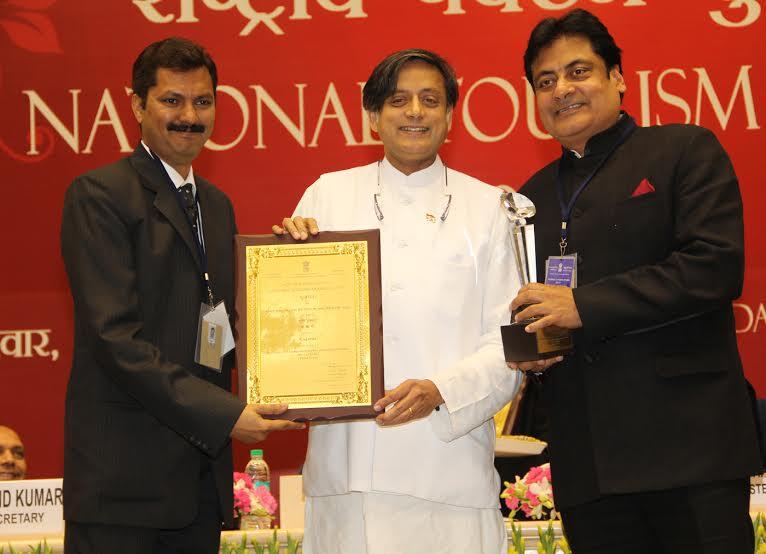
Government of India presents National Tourism award to Gujarat

Gandhinagar, 19 February 2014


The Government of India has presented National Tourism award to Gujarat Tourism for year 2012-13 for tourism development in a function in Delhi held on 18 February. IAS Vipul Mitra and Sajay Kaul received the award on behalf of Gujarat Tourism.

Source: http://deshgujarat.com/2014/02/19/government-of-india-presents-national-tourism-award-to-gujarat/

15,000 saints to campaign for Narendra Modi: Ashok Singhal

Singhal said 15,000 saints will participate in a campaign to marshal public support for Modi throughout the country during the general election.AHMEDABAD: Senior Vishwa Hindu Parishad leader Ashok Singhal today reiterated his support to Narendra Modi as the Prime Minister, saying he is the strongest candidate for the top job.

Singhal said 15,000 saints will participate in a campaign to marshal public support for Modi throughout the country during the general election.

"At present Modi is the only leader who can combat terrorism. Only he can protect the country. We have had a discussion in Maagh Mela gathering on February 1 and 2 at Prayagraj of Allahabad, and over 15,000 Hindu saints have unanimously decided to support Modi as a PM in the national interest," said Singhal.

He added that "VHP has nothing to do with any political party". "VHP is only interested in sending 'Ram-Bhakts' (devotees of Ram) to the the Parliament," he said.


He also accused Congress of supporting Muslim fundamentalists.

Disowning the statement of VHP leader Pravin Togadia that Hindus were not safe in Gujarat, Singhal said, "I do not agree. There is peace in Gujarat. Hindu and Muslims here coexist peacefully. That is the case under the leadership of Narendra Modi."


Source: http://economictimes.indiatimes.com/news/politics-and-nation/15000-saints-to-campaign-for-narendra-modi-ashok-singhal/articleshow/30687559.cms

AHMEDABAD: Senior Vishwa Hindu Parishad leader Ashok Singhal today reiterated his support to Narendra Modi as the Prime Minister, saying he is the strongest candidate for the top job.

Singhal said 15,000 saints will participate in a campaign to marshal public support for Modi throughout the country during the general election.

"At present Modi is the only leader who can combat terrorism. Only he can protect the country. We have had a discussion in Maagh Mela gathering on Feb ..

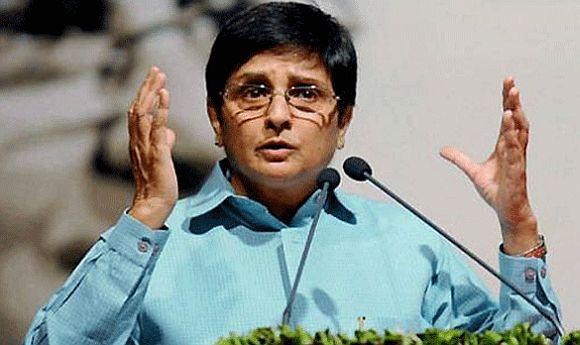
We can expect governance from the BJP: Kiran Bedi

February 19, 2014 09:17 IST
 

Next
Upasna Pandey in New Delhi
Social activist Anna Hazare's key aide Kiran Bedi says that the people of Delhi are disillusioned by the Aam Aadmi Party, and  that she herself would go with her inner ‘nod’ and not invitation or a go ahead from others to contest elections.

Bedi spoke to rediff.com's Upasna Pandey

How do you rate the performance of the 49 days of the AAP government in Delhi?
They themselves say they were in a hurry. The AAP leadership adopted a most confrontational and hostile approach towards everything and everybody as they needed to move on to campaigning for the General Elections. All their decisions were impulsive and for increasing vote banks.
This approach in fact has divided Delhi for the first time on class lines. It clearly isolated institutions such as the Delhi police and others. They displayed no skills not the intention to work around with the system, they wanted only its exposure and to punish and gain media engagement all the time.

Delhi will go for fresh polls in the next six months. How do you view this scenario? Do you see things to be any different next time around with the promise of the AAP returning with a majority?

Six months is both long and short for such politics! If Delhi remains in a confrontational and impulsive mode, then we are heading for massive disturbance in the peace quotient of the city.
There is mass anxiety about it. Anywhere one goes, the question being asked is, how long? And when will Delhi settle down; clearly people are feeling disillusioned.

Upasna Pandey
Hazare has been critical of former Delhi Chief Minister Arvind Kejriwal on the way he quit from Delhi. He (Hazare) has now also promised support to West Bengal Chief Minister and Trinamool Congress chief Mamata Banerjee as ‘the most suitable prime ministerial candidate of India’. Do you agree with him?

Anna is an institution by himself and has his very personal views on certain matters. It is best therefore to respect his views and keep yours.

What is your view on the role of the third front in the upcoming elections?

The voters today have an option of choosing one of the two national parties, the BJP, and to reject the Congress which has caused many scams. We can expect governance from the BJP since its being led by an experienced and tested leadership. We as voters will decide what we truly want. Currently, it is time to move on towards solutions and not to look for scapegoats.

Good governance and sound leadership will make corruption difficult and also with Lokpal Act, in which there is now an independence of the Central Bureau of Investigation, punishment of guilty is possible.

I don’t think that the coming together of several parties under the banner of the third front can provide the much-needed political stability; it can only result in poor governance, no progress and decline in all indices.

Upasna Pandey
There are reports that Hazare has given a nod for you to contest elections. Please share your plan ahead and the role you would play during the elections, in case you choose not to contest.

I don't seek others’ 'nod,' I go by my own inner 'nod'. I don’t know politics! I know public service, and so I willingly remained a cop for 35 years. I wish to remain who I am.

As a former associate of Kejriwal, do you and other members of the Jan Lokpal movement feel that he has become larger than the movement and perhaps Hazare himself?  Some believe that Kejriwal has hijacked the movement for political gains. Your view?

The last fast of July 2012, which he and his team undertook was not with Anna’s prior approval and the rest of the team. It was thrust upon us and the end game was pre-decided. They had said in one of their meetings that if Anna did not support them they would go without him.  Anna joined them for the sake of unity of the movement, without knowing what was in store. That is the reason he dissolved the group immediately after.

How do you think issues such as corruption, law and order, safety of women, apart from economic growth fare in an election which is witnessing strong undercurrents of communal polarisation across party lines?

Those who are interested in vote bank politics would only talk about issues such as communal polarisation. The country is not interested in this. We are looking for development and prosperity and those who do this will save the country and work for India first.

 Source: http://www.rediff.com/news/report/slide-show-1-we-can-expect-governance-from-the-bjp-kiran-bedi/20140219.htm#1
 

Monday, 17 February 2014

Gujarat debt: Digvijay Singh's curiously selective economics (Gujarat's high per capita debt is a reflection of growth not profligacy, say economists)

Gujarat's high per capita debt is a reflection of growth not profligacy, say economists